
Open Teaching Resource Hub
Free teaching and learning resources for primary teachers
Access free teaching and learning resources for primary teachers aligned to the Standards Based Curriculum!
The Open Learning Archive gives primary teachers access to a range of teaching and learning resources they can use in their classroom immediately. These resources have been developed by pre-service teachers at Balimo College as part of their assignments.
This initiative is based on the belief that learning should be shared, accessible and ongoing – ensuring that knowledge generated in one classroom can benefit many others across Western Province and beyond.
This is a new initiative, established in 2026. Initially, only a small number of resources will be available, but more will be added over time, so please continue to visit regularly.
How to use the resources
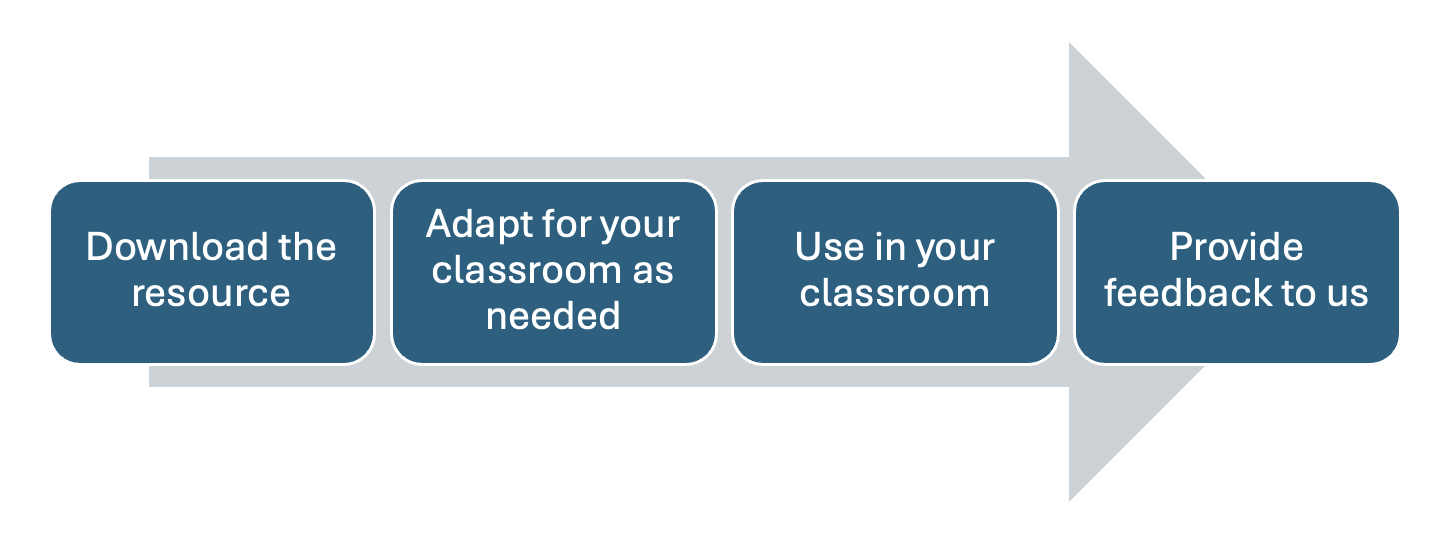
Access the free resources here
Simply click on the subject and then the grade level to find resources for your classroom. Resources will be added as they become available.
CITIZENSHIP & CHRISTIAN VALUES
Grade 1 (E1)
Grade 2 (E2)
Grade 3
Grade 4
Grade 5
Grade 6
ARTS
Grade 1 (E1)
Grade 2 (E2)
Grade 3
Grade 4
Grade 5
Grade 6

ENGLISH
Grade 1 (E1)
Grade 2 (E2)
Grade 3
Grade 4
Grade 5
Grade 6






PHYSICAL EDUCATION
Grade 1 (E1)
Grade 2 (E2)
Grade 3
Grade 4
Grade 5
Grade 6
HEALTH
Grade 1 (E1)
Grade 2 (E2)
Grade 3
Grade 4
Grade 5
Grade 6
This initiative aligns with the concept of renewable assignments. Renewable assignments are student-created works that have value beyond a course and are shared openly and licensed so they can be freely accessed and reused by others (Clinton-Lisell & Gwozdz, 2023).
Renewable assignments challenge the idea that assignments only serve assessment purposes. Instead, they enable students to create tangible and meaningful teaching and learning resources that can be shared with the wider professional community as open educational resources (Simon, Burke, & Fairbanks, 2024; Wiley, 2013).
Balimo College is proud to share selected examples of its pre-service teachers’ work to support learning and teaching across Papua New Guinea and extend the impact of student learning beyond the College.
The following five steps outline how these assignments are identified, developed, and shared.
Step 1
Pre-service teachers enrolled in a Diploma in Teaching (Primary) or Bachelor of Education (Primary) at Balimo College, Western Province, who achieve a Distinction or High Distinction on a selected assignment are invited to participate.
Step 2
Invited pre-service teachers receive written information outlining the parameters of their involvement. Pre-service teachers who choose to participate provide signed written consent.
Step 3
Participating pre-service teachers are supported by academic staff to refine and improve their assignment before it is shared more widely with the teaching profession.
Step 4
Each resource undergoes a quality review process to ensure it is accurate, useful, and suitable for teachers. Only resources that meet the required standards are published.
Step 5
Feedback is collected to help improve resources over time. This may include information about how often resources are accessed, as well as feedback from teachers about how the resources are used in practice.
References
Clinton-Lisell, V., & Gwozdz, L. (2023). Understanding student experiences of renewable and traditional assignments. College Teaching, 71(2), 125–134. https://doi.org/10.1080/87567555.2023.2179591
Simon, N. P., Burke, E. J., & Fairbanks, T. (2024). Renewable assignments: or how to use OER-enabled pedagogy to respond to Generation Z’s educational needs. Sociological Focus, 57(1), 15–20. https://doi.org/10.1080/00380237.2023.2283723
Wiley, D. (2013, October 21). What is open pedagogy? Open Content. Retrieved from https://opencontent.org/blog/archives/2975